Before the designers began talking about red carpets, retail realities or the painstaking work behind a couture gown, the evening’s message was established plainly: Filipino fashion is not a sideshow to New York Fashion Week. It belongs at the center of the conversation.
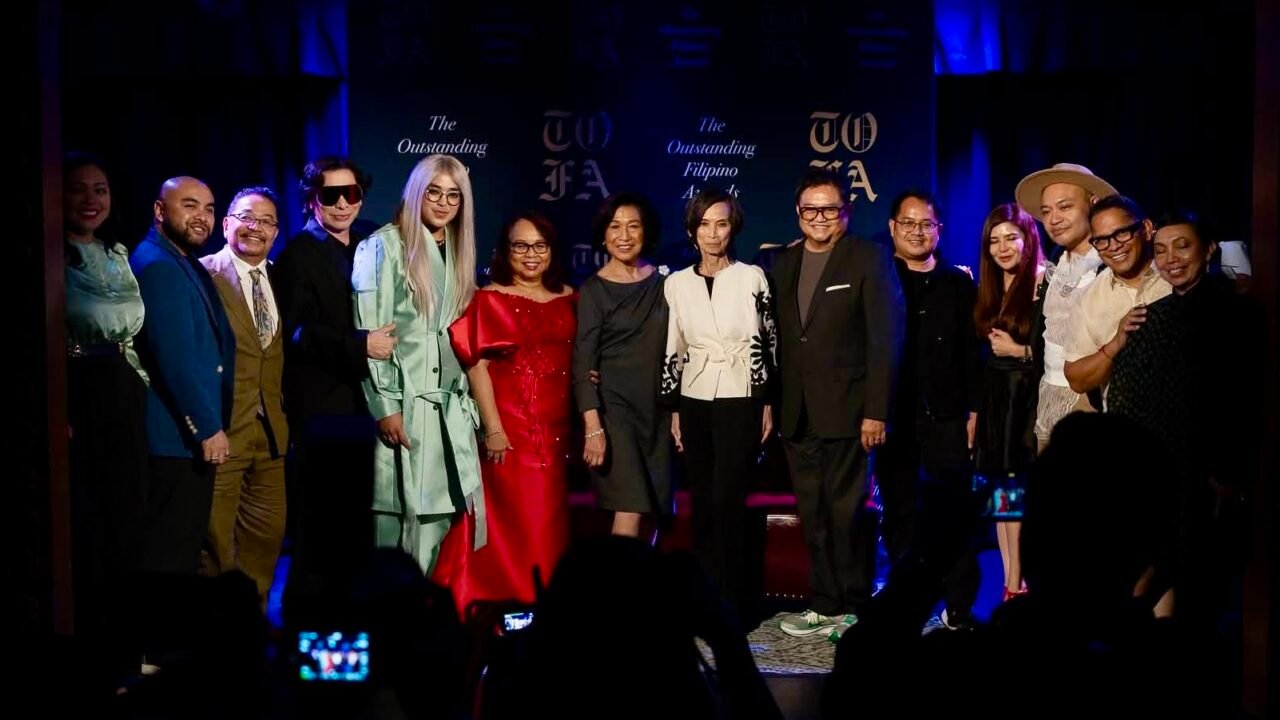
That was the premise of TOFA’s inaugural Masterclass: Filipino Fashion Visionaries, a standing-room-only gathering Sunday night at The Triad Theater in Manhattan. The program brought together fashion leaders Josie Natori, Michael Cinco, Alexis Monsanto, Kenneth Barlis and Amiel Noble for candid conversations about heritage, business, craft, creative identity and the long road from provincial beginnings to international runways.
“Tonight, in the midst of New York Fashion Week, we celebrate more than fashion,” TOFA founder Elton Lugay said in his welcome address. “We celebrate Filipino imagination, discipline, artistry, and influence on the global stage.”
The program marked the launch of TOFA Masterclass, a new platform from The Outstanding Filipino Awards designed to spotlight Filipino and Filipino American leaders beyond an awards-night format. Lugay said the conversations would examine “the risks, challenges, turning points, and hard-earned lessons behind meaningful achievement.”
“Tonight is about fashion, but it is also about heritage, representation, perseverance, and possibility,” he said.
Host Lora Nicolas Olaes guided the program, which included performances by Rasmin Diaz, Pongsky Tenioso, Morris Montilla and Chard Ocampo accompanied by Alex Gustilo on guitar. The masterclass also featured moderators Loida Nicolas Lewis; Jessy Daing and JCas Castro of Over a Glass or Two; and entertainment journalists Ruben and Janet Nepales.

The evening’s first conversation paired Lewis with Natori, founder and chief executive of The Natori Company. Natori, whose brand began with an embroidered nightshirt and developed into an international lifestyle business, repeatedly returned to the influence of her Filipino upbringing.

“My biggest asset is, first, being a woman; second is being Filipino,” Natori said. “I couldn’t be more grateful for being born in the Philippines and being a woman.”
Natori described a family shaped by entrepreneurship and artistry. Her grandmother, a pharmacist and business owner, and her father, construction executive F.F. Cruz, modeled hard work and enterprise. Her mother, a concert pianist, nurtured the artistic side that would later surface in Natori’s design world.
“There would not be a Natori if there was not the Philippines,” Natori said. “It’s been really the root and the core of what Natori is about.”
Before fashion, Natori studied economics and spent nine years on Wall Street, including a tenure at Merrill Lynch, where she became its first female vice president of investment banking. She said she enjoyed the work but eventually wanted a business of her own. A suitcase of embroidered Filipino blouses, sent by a former schoolmate, created the opening. A Bloomingdale’s buyer saw the potential of transforming one blouse into a nightshirt.
“I had never had any fantasies about being a designer,” Natori said. “I’m a businesswoman. I’m creative, yes. I feel I’m an artist at heart, but I wasn’t trained in that.”
Her success, she said, rests in no small part on the labor and skills of artisans in the Philippines.
“Without the craftsmanship and the work that has been going on for almost 49 years in our factory in the Philippines, I wouldn’t be sitting here today,” Natori said.
The second panel shifted to the practical realities of building an independent fashion business. Barlis, who works in couture, bridal, eveningwear and menswear, said artistic vision cannot be separated from the question of whether a business can survive.

“Creativity and business are two different things,” he said. “Because without sales, the creativity won’t go to the next round.”
He said a couture designer must decide when to pursue an experimental piece, when to make a commercial design and when an item may serve mainly as a showpiece. He credited the 30 sewers who help bring his collections to life.
“You cannot do this by yourself,” Barlis said.
Barlis also urged young artists not to overthink their work to the point of losing their creative identity. “The moment you start questioning yourself, you’re going to lose your identity,” he said. “Just enjoy, just have fun. Enjoy the ride.”
Noble, founder of Noble Creations, spoke more briefly but distilled his advice into a challenge for aspiring creatives: begin.
“When you have an idea, you just do it,” Noble said. “It doesn’t matter how bad it is … just keep doing it.”
He closed with a call that would be echoed throughout the program: “Support your fellow Filipinos. By supporting us, you’re supporting the whole community.”
The final panel, featuring Cinco and Monsanto, turned to the place of couture in a fashion industry increasingly shaped by fast fashion, online marketplaces and imitation. Cinco, the Dubai-based designer known for elaborate gowns, said couture continues to matter because it is made to be kept.
“Couture is very sustainable because it’s like a piece of art where people can treasure it,” Cinco said. “There’s so much craftsmanship in it, so much work, so much time and effort to finish a garment.”
Cinco said his collection shown the previous night drew from the “romanticism and grandeur of the Victorian era,” reinterpreted in wearable modern forms. Monsanto said his work was inspired by his mother’s garden, with floral, fauna and celestial ideas translated into theatrical fashion.
Both designers reflected on their experiences abroad. Cinco, who grew up in Catbalogan, Samar, said adapting to a new culture in Dubai was difficult but familiar to Filipinos accustomed to navigating change.
“We always have this trait of being used to adapt things,” he said.
Monsanto recalled arriving in the United States after establishing himself in the Philippines. “Back in the Philippines, I was already a big fish in a small pond,” he said. “But when I got here, I was a small fish in a vast ocean.”
Guest of honor Assemblymember Steven Raga, who represents New York’s 30th Assembly District in Queens, said the designers’ stories mattered because many Filipino Americans still find themselves navigating professional settings where they are underrepresented.
“When we go to work, sometimes we’re the only Filipinos that are there,” Raga said. “It’s so important to hear these stories and share it in an intimate setting.”
He urged the audience to carry the designers’ examples into their own careers and communities.
“Let’s always, always, always support our Filipino,” Raga said.
For all the glamour associated with fashion week, the masterclass’s strongest moments centered on labor: Natori’s factory workers, Barlis’ sewing team, Monsanto’s commercial work before building his own name, and Cinco’s insistence that artistry requires time. The evening offered a fuller portrait of achievement—not as an overnight ascent, but as an accumulation of discipline, family support, cultural grounding and perseverance.
As Cinco told young designers in the audience: “Dream great dreams.”
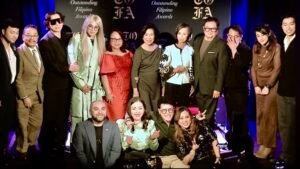
Watch highlights from TOFA Masterclass: Filipino Fashion Visionaries on YouTube – https://youtu.be/OvJZ0MEp-Zk?si=HxBsPQR2kDG40yh8