Jose Antonio Vargas, a Pulitzer Prize-winning journalist and inaugural TOFA honoree, has received an honorary Doctor of Humane Studies degree, honoris causa, from the University of San Francisco, adding a new milestone to his legacy as one of the most influential Filipino Americans of his generation. Widely recognized as one of the country’s most courageous voices for undocumented immigrants, Vargas delivered a commencement address to graduates of USF’s College of Arts and Sciences graduate programs, underscoring the power of storytelling, identity and belonging.
Vargas first came to national prominence in 2011 when he publicly revealed his status as an undocumented immigrant in a widely read personal essay, transforming his already distinguished journalism career into a platform for immigration reform and immigrant rights advocacy. Born in the Philippines and brought to the United States as a child, he spent more than three decades living without legal status while working in newsrooms, including The Washington Post, where he shared a Pulitzer Prize as part of a team covering the Virginia Tech shootings.
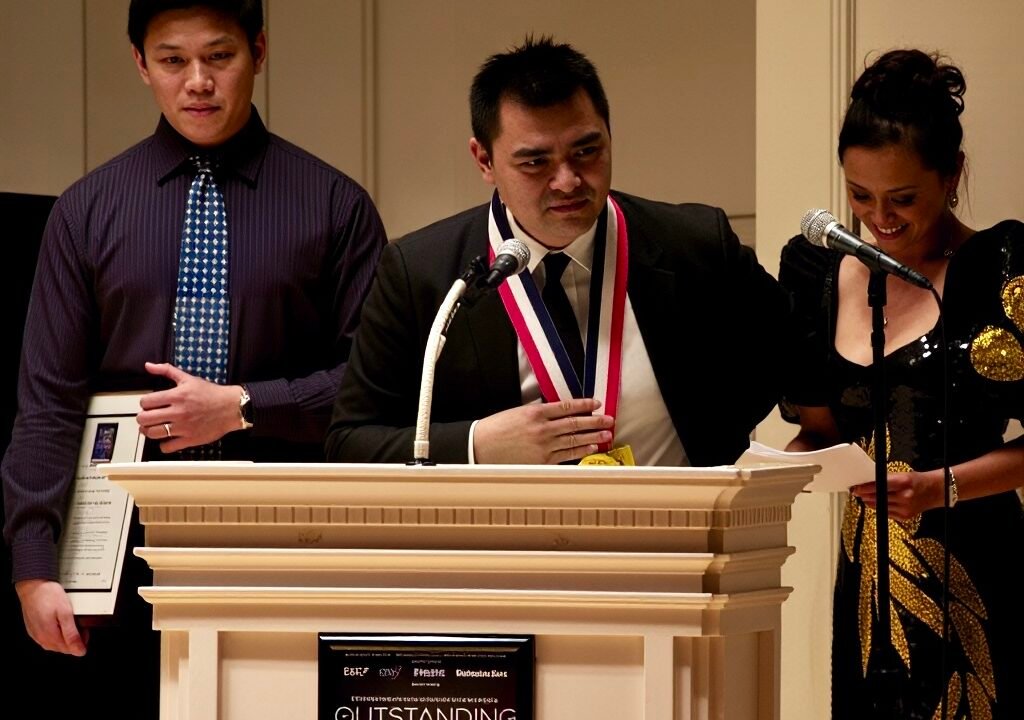
That same year, Vargas was honored on the Carnegie Hall stage as one of the inaugural awardees of The Outstanding Filipino Awards (TOFA), recognized for his groundbreaking work in media and for placing the undocumented Filipino experience at the center of the national conversation. The TOFA recognition coincided with his emergence as the most visible undocumented Filipino immigrant in America, a role he embraced by founding Define American, a nonprofit organization that uses storytelling and culture to shift how the country talks about immigration.
Vargas later chronicled his life in the bestselling memoir “Dear America: Notes of an Undocumented Citizen,” blending personal narrative with a broader critique of the U.S. immigration system and the pressures of the “model minority” myth on Filipino and Asian American communities. Through films, books and public talks, he has insisted that policy debates must recognize the full humanity of immigrants.
After more than 30 years without legal status, Vargas took a significant step forward in his immigration journey when he secured a three-year O-1 visa, granted to individuals with “extraordinary ability” in fields such as the arts, sciences or education.
In Mountain View, California (where he grew up and attended high school) a public K–5 campus, Jose Antonio Vargas Elementary School, now bears his name, honoring his contributions to journalism and immigrant advocacy. The honorary doctorate from the University of San Francisco stands alongside his Pulitzer, the school naming and his inaugural TOFA recognition as markers of how one undocumented Filipino’s story has reshaped public understanding of immigration, identity and what it means to be American.