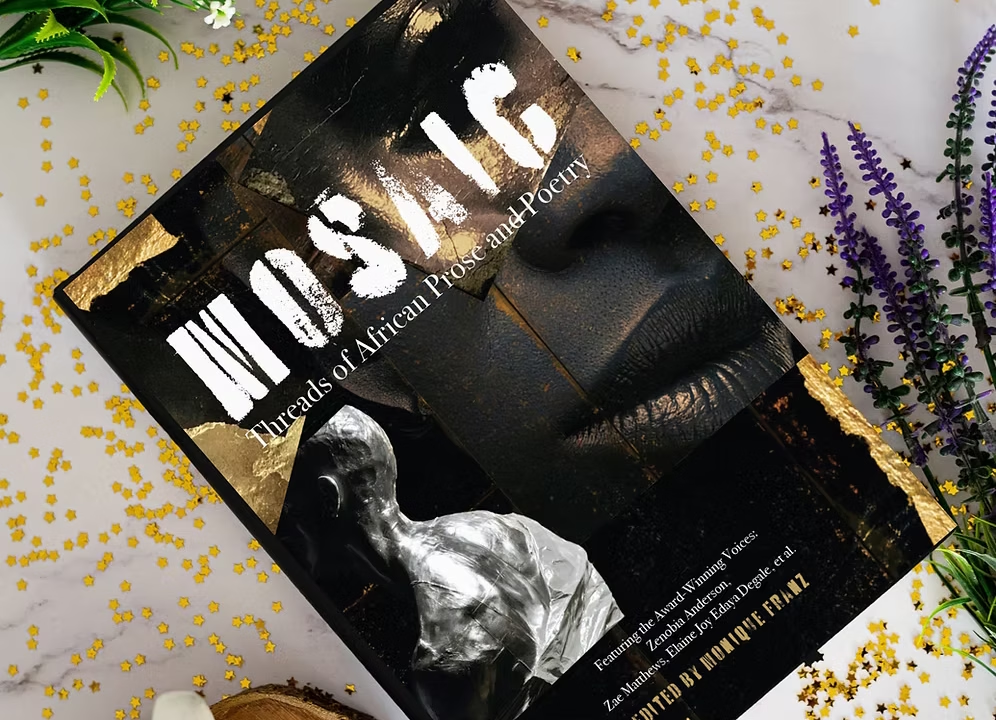
Afro-Pinay writer Elaine Joy Edaya Degale, who writes under the pen name E.J. Dreamweaver, has received a Pushcart Prize nomination for “Paraíso Verde,” a short story about a Black Filipina woman whose expectations of marriage and family collide with her in-laws’ prejudices. The story appears in “Mosaic: Threads of African Prose and Poetry,” published by Kinsman Quarterly.
Kinsman Quarterly held a virtual launch for the anthology on Nov. 14, with Degale among eight writers scheduled to read. Edited by Monique Franz, the founding director of Kinsman Quarterly, “Mosaic” is the third annual collection from the African Diaspora Award. It brings together poetry, fiction and essays on migration, memory, family and belonging, according to the publisher’s book listing.
A family’s welcome comes with conditions
In “Paraíso Verde,” Narra and her Russian American husband, Eden, live in New York and are expecting their first child. They have been together for eight years. When Eden’s parents arrive to welcome their first grandchild, talk turns to whether the baby might have dark skin and whether a dark-skinned child should carry their family name.
For Narra, the visit forces a reckoning with the life she thought she had built. She and Eden have a home and are about to start a family, but his parents’ questions expose the conditions they place on accepting her child. What begins as a family visit becomes a test of what belonging means in the marriage and in the country Narra has made her home.
The title translates to “Green Paradise” and nods to both the biblical garden and a decorative plant in the story. The plant looks lush but has not taken root, much like the marriage Narra thought would sustain her. Narra, by contrast, takes her name from the Philippine national tree. Degale hopes to expand the story into a novella.
A story rooted in Mindanao
The daughter of a Liberian father and a Filipina mother, Degale identifies as Afro-Pinay, a term that reflects both her Black and Filipino identities. She grew up in Santo Niño, South Cotabato, in the southern Philippines, where her family’s work in farming and horticulture helped shape the way she writes about plants and survival, she told MindaNews in an interview republished by the Philippine Daily Post.
“In my childhood, plants were the first language I learned. They represent survival, memory, and renewal,” Degale told MindaNews. That imagery also runs through works and projects such as “Moonflower,” “Dandelion,” “Golden Pothos” and “Bonsai,” while her forthcoming debut novel, “Sunflower: Black Baby,” explores Afro-Pinay identity and visibility, MindaNews reported.