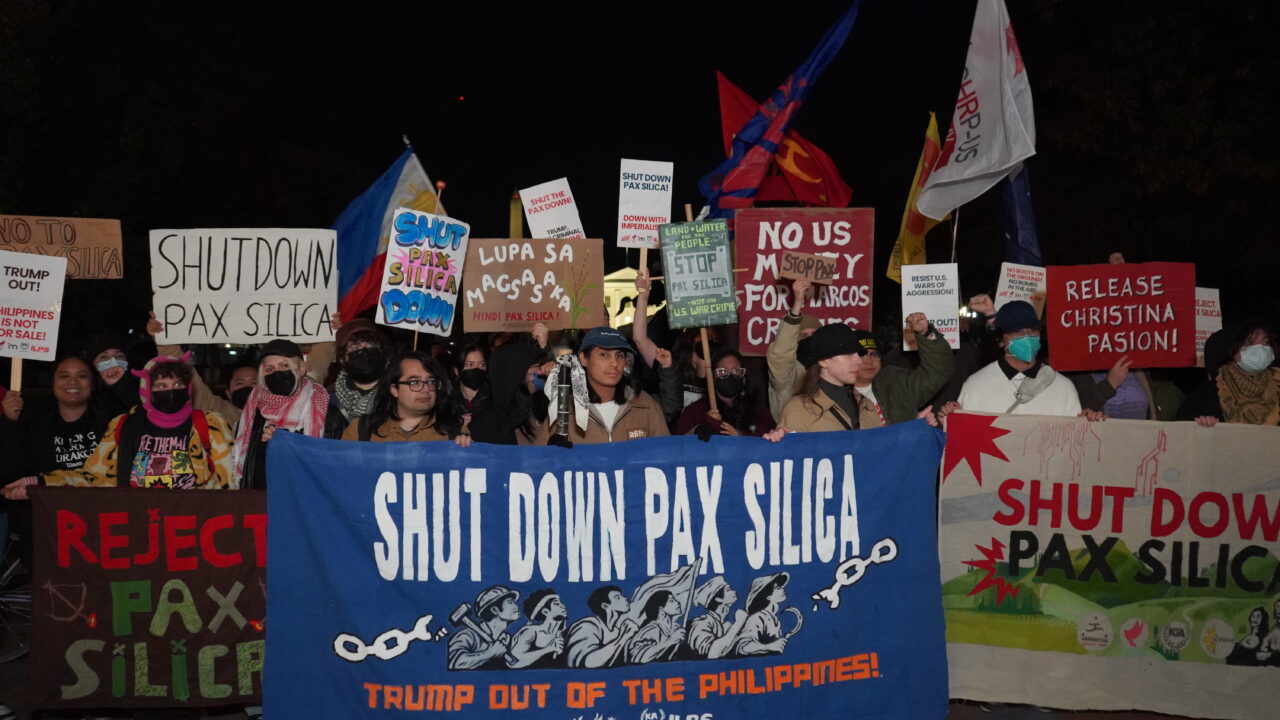
New York Assemblymember Steven Raga called on the Philippine government to reject a proposed industrial hub under the U.S.-led Pax Silica initiative, saying it threatens Indigenous land rights and workers’ livelihoods. His statement echoed demands from demonstrators who rallied outside the Philippine Embassy in Washington and marched along 16th Street toward the White House, according to protest organizers.
“Technological advancement must serve working people, not enrich powerful corporations at the expense of their rights and livelihoods,” Raga said in a written statement. “The ancestral lands, natural resources, and sovereignty of the Philippines and Southeast Asia are not for sale.”
Raga, who represents New York’s 30th Assembly District, said he was joining Indigenous leaders, farmers, environmental advocates and human rights groups in urging Philippine President Ferdinand Marcos Jr.’s administration to reject the proposed agreement. He also condemned what he described as the repression of peaceful protesters opposing the initiative.
Filipino American groups join Washington protest
Organizers said more than 75 people took part in the Washington demonstration, including advocates for Philippine sovereignty, anti-war veterans, labor activists and students. They said the march was part of a coordinated day of action against Pax Silica and President Donald Trump’s visit to Manila that drew more than 1,500 people across the United States, including in New York, Los Angeles, Seattle, Chicago and Honolulu.
“Even when we live thousands of miles away, what happens in the Philippines still matters to us,” said Danica, a Filipino American student at Morgan State University whom organizers identified only by her first name. “Environmental destruction and the displacement of communities aren’t just distant political issues. They affect real people. They affect families. They affect the places we call home.”
Speakers also questioned whether the project would create stable jobs for Filipino workers. Carlo, identified in the organizers’ release as a member of Filipino Workers of Wheaton, said a lack of jobs in the Philippines forces many Filipinos to seek work abroad.
No deal signed during Trump’s visit
The Philippines joined Pax Silica in April, when the two governments announced plans for a 4,000-acre industrial hub in New Clark City, Tarlac province. The broader initiative aims to strengthen supply chains for semiconductors, artificial intelligence and critical minerals. Philippine officials say the hub would attract investment and create skilled manufacturing jobs.
In nearby Sapang Kawayan, Indigenous Aeta residents say they fear losing ancestral land and access to a river they rely on for water and fishing. Joshua Bingcang, then head of the Philippine Bases Conversion and Development Authority, estimated in September that any relocation would affect about 40 households and said those families would remain within the same local district.
Trump arrived in Manila on Nov. 17 for a meeting with Southeast Asian leaders. On Nov. 18, Marcos and U.S. Ambassador to the Philippines Lee Lipton said the two countries would not sign a framework agreement for the hub during the visit. Philippine Trade Undersecretary Ceferino Rodolfo said officials were still aiming to reach an agreement by year’s end and denied that protests had affected the timing.