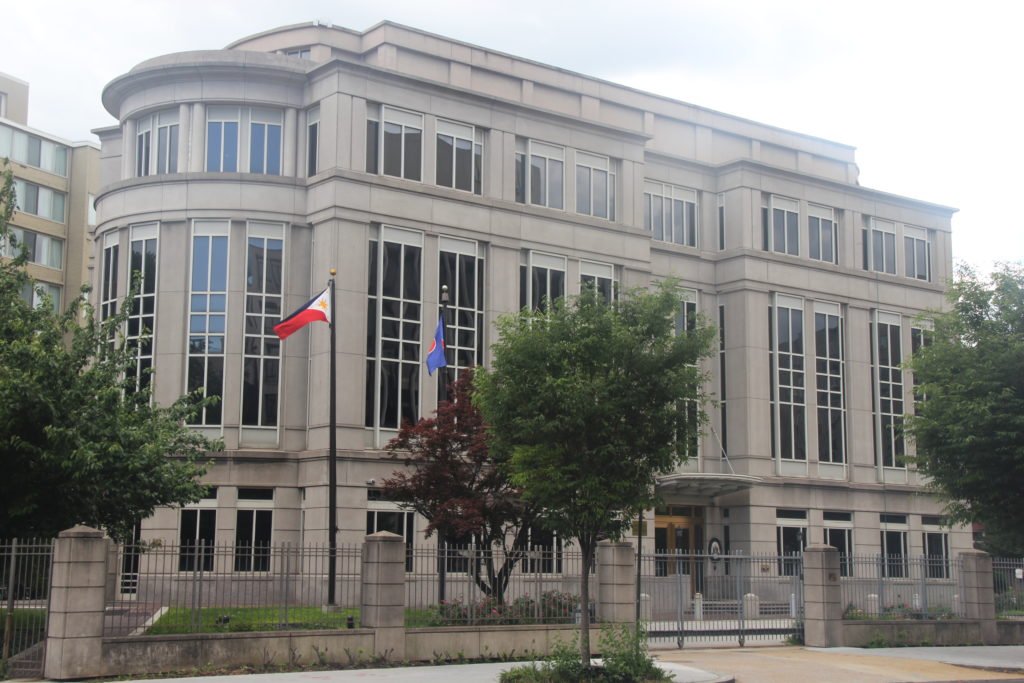
The Philippine Embassy in Washington is urging Filipinos in the United States to stay informed about immigration-policy developments and seek qualified legal advice if they have concerns about their status, following reports that the U.S. government is reviewing some business and tourist visas held by people who later applied for asylum.
In an advisory dated Aug. 26, the embassy said recent reports indicate that the U.S. Department of State has begun reviewing B1/B2 visas issued to foreign nationals who later sought asylum in the United States. The embassy said visa revocations are expected to occur on a rolling basis.
The advisory does not say how many Filipino nationals could be affected. It also stresses that immigration cases are decided individually by the appropriate U.S. authorities.
The reported U.S. review concerns people issued B-1 visas for temporary business travel or B-2 visas for tourism and other temporary visits who subsequently applied for asylum. The State Department is coordinating with the Department of Homeland Security to identify and potentially revoke the nonimmigrant visas of people who entered as short-term visitors and later sought to remain in the United States through asylum claims, State Department spokesman Tommy Pigott said.
The number of visa revocations and final scope of the action remain unclear. News reports, citing State Department documents and U.S. officials, said the review could involve visas issued between 2016 and 2026 and could affect up to 200,000 foreign nationals. However, as of Aug. 26, no detailed public policy document, effective date, exemptions or notice procedures had been published by the State Department.
A visa revocation would not necessarily result in immediate deportation for someone with a pending asylum case, according to officials cited in reporting on the planned action. But it could change the person’s immigration classification and remove their status as a business or tourist visitor. Individual consequences depend on the facts of each case.
The embassy encouraged Filipino nationals with questions about their immigration status to contact a qualified U.S. immigration attorney or an accredited legal service provider. It also reminded community members to comply with applicable U.S. immigration laws.
For emergency consular assistance or Assistance-to-Nationals concerns, the embassy said Filipinos may call 202-368-2767 or 202-769-8049, or email atn@phembassy-us.org.