Democrat Patrick Martinez and Republican Brandon Castro outlined different approaches to affordability and public services while finding agreement on immigrant protections and community investment at an Oct. 17 forum in the race for New York’s 30th Assembly District.
The candidates are seeking to succeed outgoing Assemblyman Steven Raga, the first Filipino American elected to the New York State Legislature. Raga is leaving the Assembly after an unsuccessful bid for state Senate.
At the Queens People’s Movement forum at The Palace in Woodside, Martinez supported higher taxes on wealthy earners, expanded housing construction and a statewide health care system. Castro emphasized fiscal accountability, workforce development, constituent services and the effects of policy changes on small businesses.
Both described growing up in the district and pledged to continue serving its Filipino American and other immigrant communities.
“I’m looking to stay for generations to come,” Martinez said in his closing remarks, calling for cooperation among the neighborhood’s communities.
Castro emphasized his Woodside upbringing and family connections, saying his campaign sought to bring different perspectives into local government.
“I’m going to work regardless of party lines,” he said.
A returning challenger and a narrow primary winner
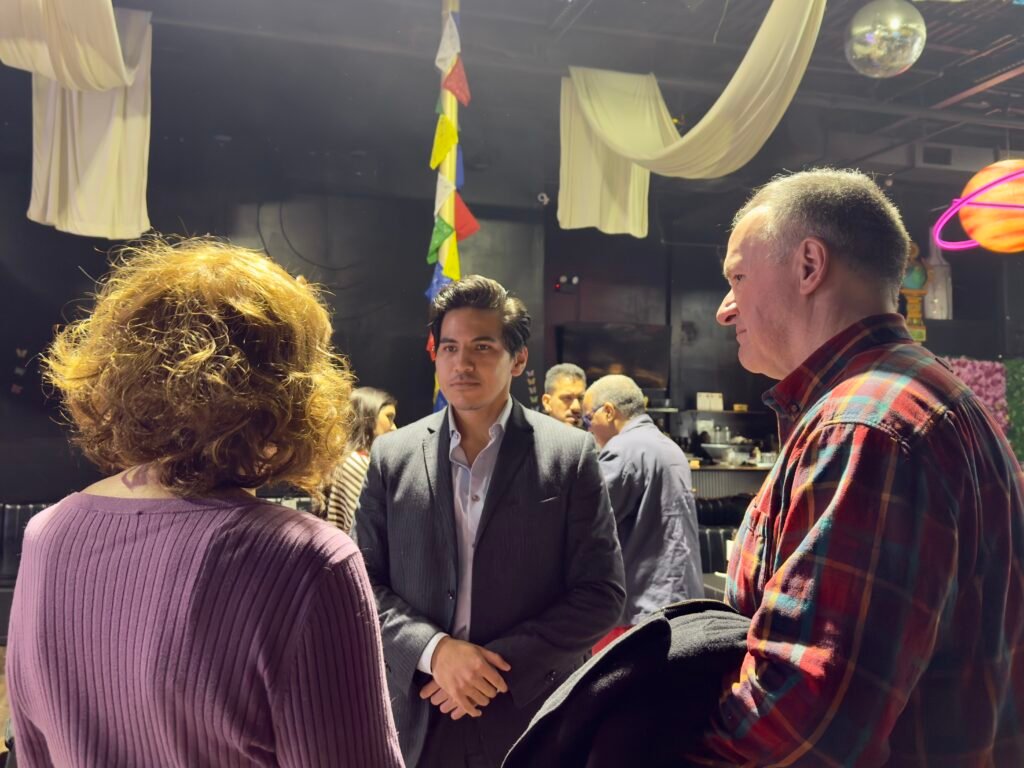
Castro is making his second bid for the Assembly seat. He lost to Raga in 2024, receiving about 39% of the vote to Raga’s 60%. A Queens College graduate, Castro previously worked for the city Department of Small Business Services.
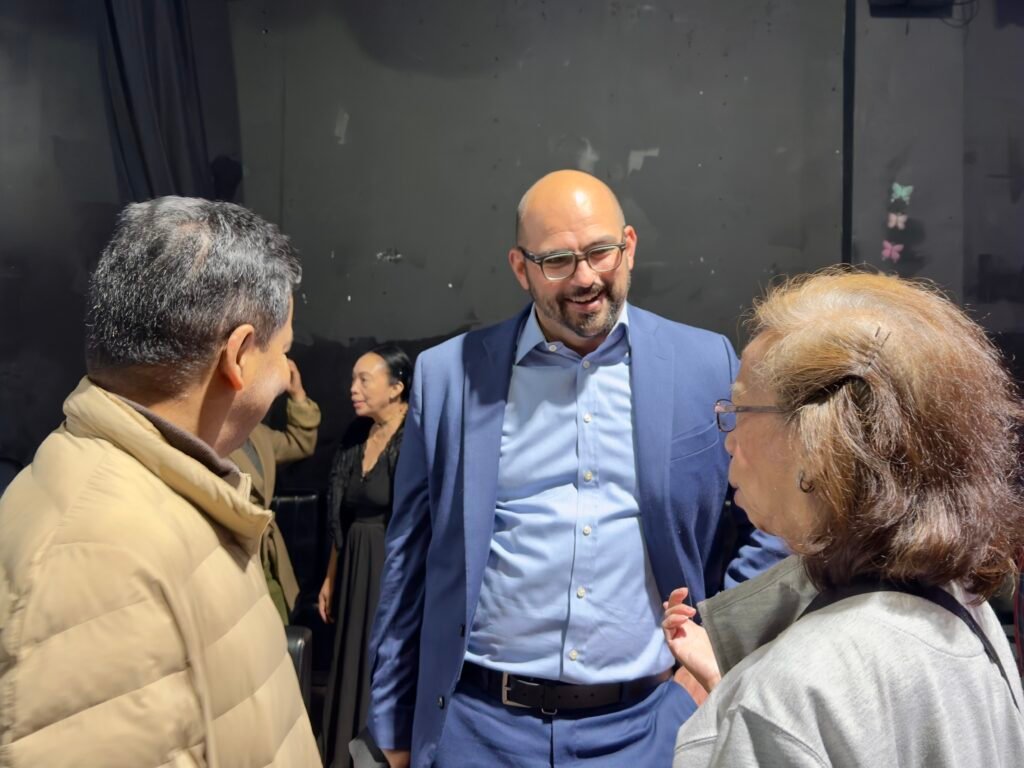
Martinez, a former English teacher in South Korea who works in digital advertising, won this year’s Democratic primary by seven votes after a recount. He has served on Community Board 2 and as a Democratic district leader.
At the forum, Castro emphasized his experience connecting people with employment and business resources. Martinez described his community board work on land use, transportation and public space.
Housing, taxes and wages
Martinez supported a rent freeze for rent-stabilized tenants, recalling the relief he felt when his own rent remained unchanged.
“It’s great when your rent does not go up because that’s one less concern,” he said.
He called for higher taxes on people earning at least $1 million annually, along with changes to corporate taxation.
“Taxing the rich is an absolute imperative,” he said.
Castro acknowledged the pressures facing renters but raised concerns about paying for building maintenance and infrastructure. He called for deeply affordable housing without giving an unequivocal endorsement or rejection of a rent freeze.
Questioning the affordability of a newer development near his home, Castro put the issue in personal terms.
“I can’t afford that,” he said. “I already have my own expenses and bills.”
Both supported preserving and expanding Mitchell-Lama housing.
Martinez also supported higher-density construction, social housing and investment in NYCHA. Castro emphasized protecting residents from displacement and questioned whether newer high-rise buildings met their needs.
Asked about a proposal to raise the minimum wage to $30 by 2030, Castro said an increase could be considered but cautioned that small businesses could respond by cutting hours or jobs. He did not endorse a specific wage.
“We want to make sure that all the community voices are heard first before we pass anything like that,” he said.
Martinez did not directly address the proposed wage level in that response, focusing instead on taxes and affordability.
Immigration enforcement and community services
Both opposed ICE being stationed outside churches and schools.
“No, they should not,” Castro said when asked directly about those locations.
Martinez gave the same answer, adding: “It’s intimidating, it’s scary, it’s not safe.”
Martinez endorsed the full New York for All bill and said local police should protect residents rather than collaborate with federal immigration enforcement. He described responding to an ICE alert in Elmhurst and distributing know-your-rights information in Marble Hill.
He said residents should feel safe seeking medical care, sending children to school and asking for help.
Castro, the son of Ecuadorian immigrants, described the time and expense his family faced in navigating the immigration system.
“My father took over 10 years to become a citizen,” he said.
He called for easier pathways to citizenship and emphasized legal referrals and assistance navigating government services. His comments addressed both federal immigration changes and services he would seek to provide through an Assembly office.
Health care and workforce development
Martinez endorsed the New York Health Act, citing his experience receiving medical care while living in South Korea. He said patients should not have to weigh the cost of treatment against the risks of waiting.
“Do I go, or should I just wait a day? Should I see how I feel next week?” he said, describing the questions people face when deciding whether to seek care.
He also called for tested emergency-response systems and continued funding for Elmhurst Hospital.
Castro supported protecting the hospital and increasing transparency around prescription prices. He recalled walking to obtain medical care after a bicycle injury because he was concerned about the cost of an ambulance.
“We shouldn’t have to choose whether we want to go visit a doctor, take an ambulance when we absolutely need it,” he said.
He called for reforms to make care more affordable but did not state a position on the New York Health Act.
On women’s economic security, Martinez supported universal child care and stronger protections against wage discrimination. Castro emphasized access to vocational education, career development and Workforce1 programs.
Castro said students and job seekers needed better connections to resources that could help them prepare for employment.
“We need to reform and fix,” he said, arguing that education policy should emphasize results and accountability rather than spending alone.
Climate policy and casino concerns
Castro offered conditional support for portions of the climate legislation described by the moderator, saying he wanted measurable outcomes, spending accountability and assurances against tax increases and excessive economic costs.
Martinez said he had not reviewed the specific bill but supported moving more quickly toward clean energy. He connected that position to flooding and air-quality concerns in the district.
“We need to be working as aggressively as possible to go to a green, clean energy solution future,” Martinez said.
On casino development, Castro reiterated his opposition, citing quality-of-life concerns and the influence of wealthy developers.
“I would never vote in favor of it now,” he said.
He also supported services for gambling addiction and trafficking survivors.
Martinez called for enforcing developers’ commitments to addiction services, increasing treatment and education funding, and protecting residents from targeted gambling advertising. His response did not explicitly endorse or reject the casino itself.
Continuing Raga’s work
In response to a question submitted by TOFA NEWS, both candidates described how they would serve District 30’s Filipino American community after Raga leaves office.
Castro praised Raga’s work and proposed preserving and strengthening community centers, supporting local businesses and expanding workforce development and entrepreneurship programs.
He said those efforts should connect Filipino American residents with their neighbors across ethnic and political lines.
“I always started with what we have in common,” Castro said.
Martinez emphasized small businesses, cultural programming and representation for Filipino, Thai, Nepali, Burmese, Indonesian and other communities in Albany.
He said holding the seat meant ensuring those communities’ voices were heard “loud and clear in Albany.”
Martinez said he was the only candidate using Tagalog in campaign materials. In his closing remarks, Castro said his campaign also had Tagalog literature, along with materials in several other languages.
Both expressed openness to allocating funds for immigrant community centers. Neither specified an amount or funding mechanism.
The candidates will face voters Nov. 3.