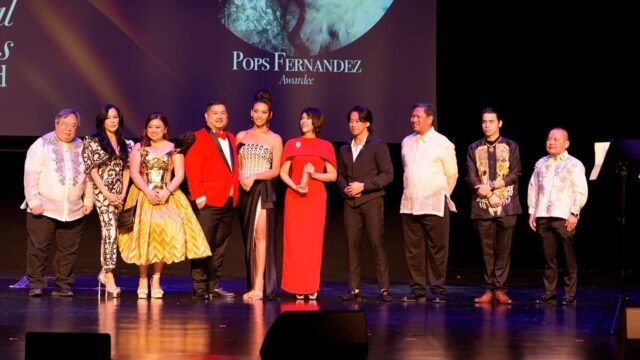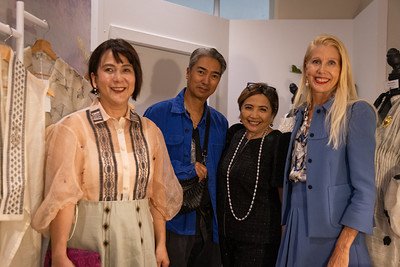
A piña tunic top and pants by Cebu designer Philip Rodriguez were among the Filipino creations featured in the “Piña: Woven from the Philippines” showcase at United Nations Headquarters, held alongside a global forum on sustainable materials and responsible fashion.
The Sept. 16 presentation formed part of the United Nations Fashion and Lifestyle Network’s annual meeting and its “Smart Materials for a Sustainable Future: Tradition and Innovations” session at the UN Goals Lounge. Held during New York Fashion Week, the event explored how heritage craftsmanship, local knowledge, scientific research and creative innovation can contribute to more circular and resilient systems of fashion production.
Rodriguez was among Filipino designers and institutions whose work was featured in the Philippine piña presentation. The showcase highlighted the heritage, artistry and contemporary potential of piña, a textile handwoven from fibers extracted from pineapple leaves.
The event positioned piña as a natural, biodegradable and low-waste material with potential for modern luxury and sustainable design. In addition to its cultural significance in Philippine dress, the textile is valued for being lightweight, breathable and durable.
The Philippine delegation was led by Wilma Santos-Huang, the Philippines representative and advisory-group member of the UN Fashion and Lifestyle Network and a board trustee of HABI: The Philippine Textile Council.
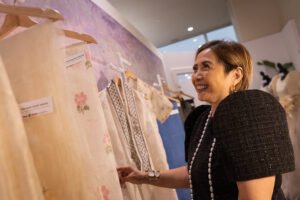
Evangeline Pascua-Manalang, chief science research specialist at the Department of Science and Technology–Philippine Textile Research Institute, discussed piña’s sustainable qualities and its role in developing new approaches to fashion materials.
“Piña is not just our history; it is a vital answer to the global fashion industry’s search for truly sustainable, high-performance smart materials,” Pascua-Manalang said in the event release.
Philippine piña showcase
The “Piña: Woven from the Philippines” exhibition included pieces and materials from La Herminia, Raquel’s Piña Cloth Products, Lulu Tan Gan, Jor-el Espina, Rodriguez, Vania Romoff, Aranaz, LAKAT Sustainables, Nazareno/Lichauco, Nicco Tiu, the Design Center of the Philippines and HABI: The Philippine Textile Council.
The presentation was organized with the participation of DOST-PTRI, HABI and the UN Fashion and Lifestyle Network.
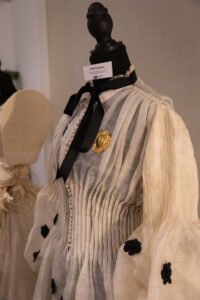
Rodriguez, widely known for creating contemporary interpretations of Filipino heritage wear, contributed a piña tunic top and pants to the exhibit. His inclusion placed a Cebu-based designer among the Philippine creatives presented before a global gathering focused on sustainable materials and fashion.
Heritage meets sustainability
Piña is closely associated with barong tagalog, Filipiniana gowns and other formal Philippine attire. Its production involves extracting fibers from pineapple leaves, processing them by hand and weaving them into cloth—a practice that preserves specialized skills and supports artisan communities.
The UN discussion emphasized that sustainable fashion must account not only for a material’s environmental impact but also for craftsmanship, labor and the communities whose knowledge makes the materials possible.
As industries seek to move away from linear models of production and consumption, participants examined how heritage textiles such as piña can support circular design and more responsible approaches to fashion. The UN Fashion and Lifestyle Network said the forum was intended to explore ways that traditional knowledge, scientific research and creative practice can help build more sustainable and equitable fashion systems.