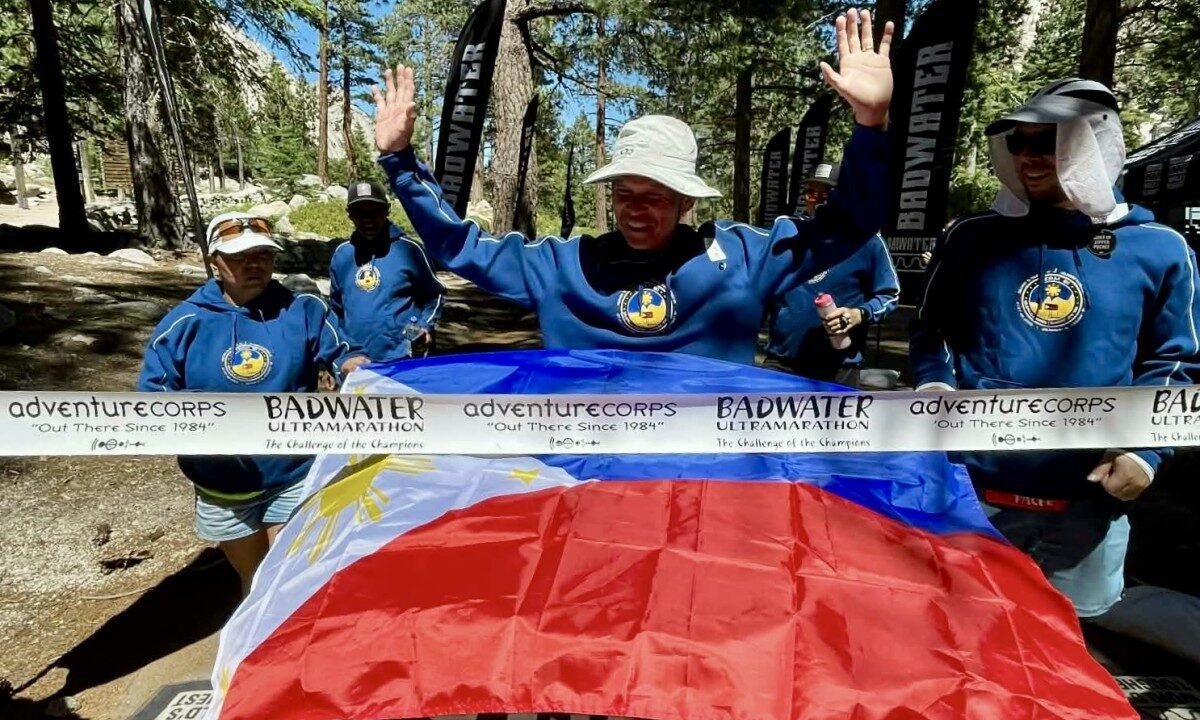
For Gerald Tabios, the road to one of the world’s most punishing races begins far from the searing heat of Death Valley. It starts in Malaybalay City, Bukidnon, where his story (like many Filipino American journeys) is rooted in sacrifice, resilience and a deep sense of community.
“This July, I’ll be returning to Death Valley as the only Filipino entered in the 2026 Badwater 135 Ultramarathon, widely regarded as one of the world’s toughest foot races,” Tabios told TOFA NEWS. He speaks of the honor with quiet pride, aware that he is carrying not just his own dream but the hopes of those who see themselves in his story.
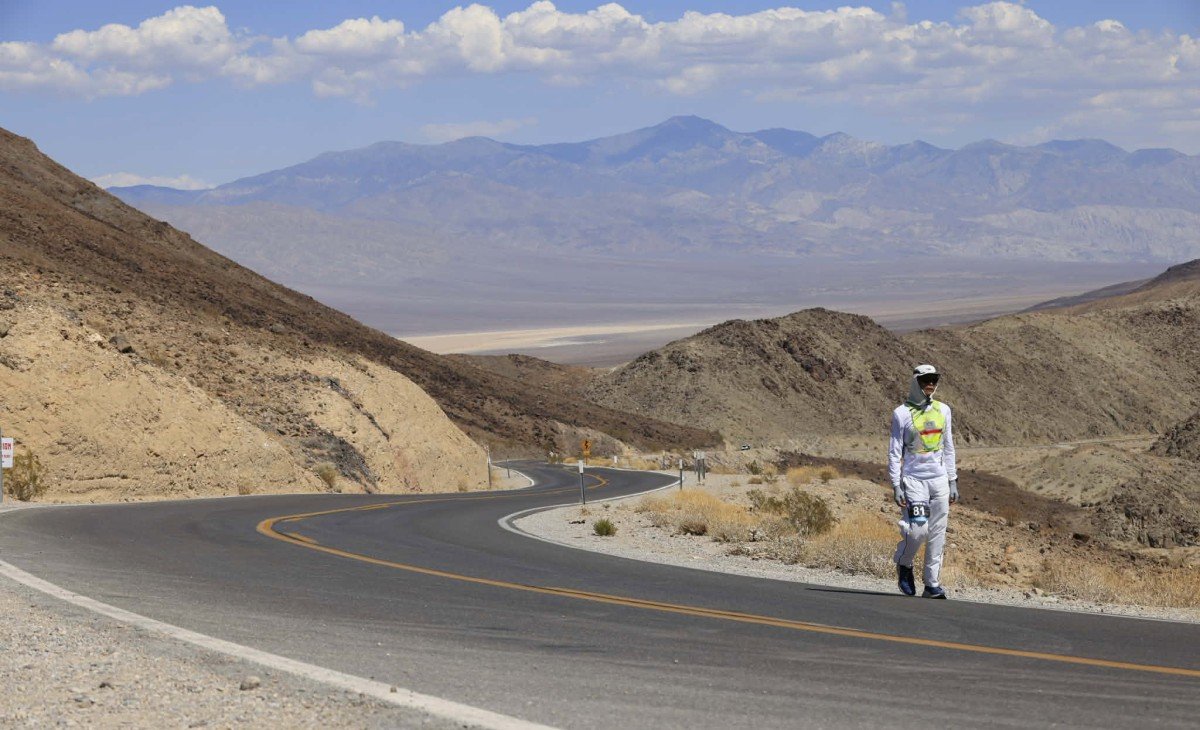
The Badwater 135 covers 135 miles (217 kilometers) across Death Valley in extreme summer heat before climbing to Whitney Portal in California. Runners have 45 hours to complete the course, where temperatures can soar above 130 degrees Fahrenheit, testing not only the body but also the mind and spirit.
For Tabios, 56, this year’s race is more than another test of endurance. It is a chance to reach a rare milestone.
“This will be my 10th Badwater 135 start,” he said. “If I reach the finish line, I’ll join the select group of runners in race history to achieve 10 or more Badwater 135 finishes.”
His journey reflects the Filipino value of lakas ng loob, or inner strength – a quiet but unyielding courage shaped by years of hard work and uncertainty. Born in Malaybalay City and trained as a civil engineer, Tabios moved to New York City in 2001 with his wife, Donna. What began as a practical routine (a daily 10-kilometer run to work) gradually transformed into a lifelong ultrarunning journey.
In 2004, he ran his first New York City Marathon. Two decades later, he has logged 20 consecutive finishes at the iconic race, turning a single marathon into an annual ritual of discipline and gratitude. Along the way, he expanded his reach far beyond 26.2 miles.
Tabios has now completed more than 220 marathons and ultramarathons, a tally that speaks to persistence more than spectacle. His resume includes five Boston Marathon finishes and 13 finishes at The Great New York 100 Mile Race, a grueling loop through the city that has become one of his signature events. Each finish line is another chapter in a story defined by consistency, not overnight success.
Yet his achievements are not only about personal records. They are also about bayanihan, the Filipino spirit of communal unity and shared effort.
After his 13th Great New York 100 Mile race this June, Tabios did not dwell on his time. Instead, he listed the people who helped him get there – friends who rode bikes alongside him for hours, a pacer who joined him in the final miles, volunteers who waited at aid stations through the night, and Donna, his wife, who handled “behind-the-scenes logistics” and supported his passion without fanfare.
“A heartfelt thank you to the people who made this journey possible,” he wrote on his Facebook wall, naming each one. In ultrarunning, no one truly runs alone. Crews, pacers and loved ones often decide whether an athlete finishes or falls short. For Tabios, that network mirrors the same communal spirit that defines Filipino culture.
His sense of responsibility extends beyond his personal circle.
During his 2014 Badwater 135 race, he partnered with UNICEF to raise funds for survivors of Typhoon Haiyan, channeling his effort into support for communities rebuilding in Leyte and Samar. In doing so, he turned a solitary desert run into a collective act of care, another expression of bayanihan.
Tabios’ story has drawn attention outside the running world.
In 2018, his Badwater journey was chronicled in the documentary “Running for Freedom: My Journey as an Ultra Marathon Runner,” which followed him as he and his crew crossed two deserts, climbed three mountains and battled record-breaking heat in Death Valley.
More recently, he captured his experiences in a memoir, “Escape from Comfort: Lessons from the Road and Death Valley,” reflecting on how distance running reshaped his life far from home.
Through it all, his connection to Malaybalay has never faded.
When his hometown recognized him for his achievements, Tabios responded with humility rather than self-congratulation.
“Humbled and grateful to be recognized by my hometown,” he said. “I will continue to do my best to make my hometown proud.”
That pride travels with him to every starting line.
In the United States, where Filipino American stories are often overlooked in mainstream sports narratives, Tabios stands as a quiet representative of a broader community – working-class immigrants, second-generation families and overseas Filipinos who understand what it means to endure.
As he prepares to stand once more in the furnace of Death Valley from July 27 to 29, Tabios is not chasing celebrity. He is chasing a promise he made to himself years ago: to keep showing up, mile after mile, with gratitude and resolve. Whether he secures his 10th Badwater finish or not, his journey already embodies the twin pillars of the Filipino spirit – lakas ng loob to face the hardest roads, and bayanihan that makes each road less lonely.
For Tabios, every step across the desert is more than a test of endurance. It is a way of carrying his hometown, his family and the Filipino American community with him – proving that even in the harshest places, a shared spirit can go the distance.
Editor’s note: Tabios received a 2022 The Outstanding Filipino Award (TOFA) in sports for long-distance running at The Town Hall in New York.