“The challenge is not to do ad lib, not to improvise,” Filipino actor Piolo Pascual said, describing the strict period discipline behind Manila’s Finest, Raymond Red’s police drama set in 1969 Manila. “It’s really important that you have to sound period,” he added, underscoring how the film worked to capture the language, behavior and texture of a city on the brink of Martial Law.
The film, which screens as part of the New York Asian Film Festival, follows police officers navigating unrest, corruption and rising political tension in the years before Martial Law was declared in 1972. Red said that time period was crucial to the film’s emotional pull because “the feeling of dread and doom” was already building, even if it “wasn’t there yet.”
The sold-out July 22 screening at IFC Center was followed by a Q&A with Red and Pascual, but the discussion made clear that Manila’s Finest is not simply a period piece. It is a film built from memory, research and the testimony of people who lived through the era.
Red traced the project’s beginnings to writers Moira Lang, Sherad Sanchez and Michiko Yamamoto, especially Lang’s discovery of a retired Manila policeman’s account from the period. “Moira read an account of a retired Manila’s finest policeman from the era,” Red said. “That story, the anecdotes from that written account, inspired Moira and got her writing the screenplay.”
For Pascual, the film’s subject made the role an immediate yes.
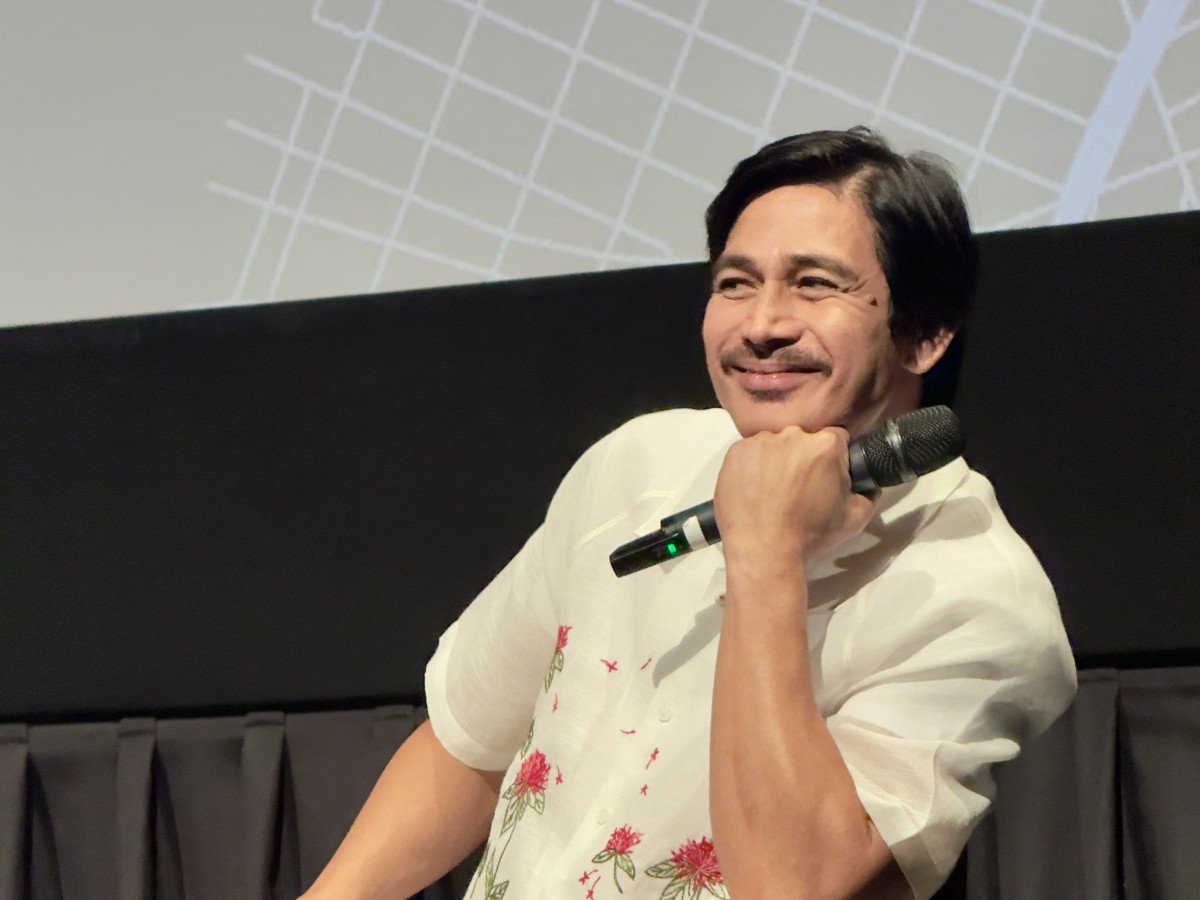
“From the first pitch, it was an easy yes right away because of the subject, because of the material, because of the concept,” he said. “As an actor, you always wanna look for something different and having that sociopolitical aspect to it.”
He said the project also felt urgent because “there is so much turmoil, there’s so much chaos happening around the world, and we wanted to mirror that.” Pascual added that, born in the late 1970s, he wanted “to re-educate” himself about a period he did not experience firsthand.
That research went far beyond surface-level references.
Pascual said he studied videos of 1960s life to observe “how people were, how they acted demeanor-wise, nuances, and how they dressed,” from household behavior to precinct culture. He also said he spoke with his mother, who was in her 20s during that era, and worked with an acting coach.
“Also, we had point persons, a retired cop who was also part of the Manila’s Finest,” Pascual said. “And then we had two point persons as well, a historian, Pete Lacaba, and Ricky Lee, a national artist. So we had interviews with them, and they shared their stories about what happened during that time.”
Red said that firsthand material helped the production create more than just a visual approximation of the past.
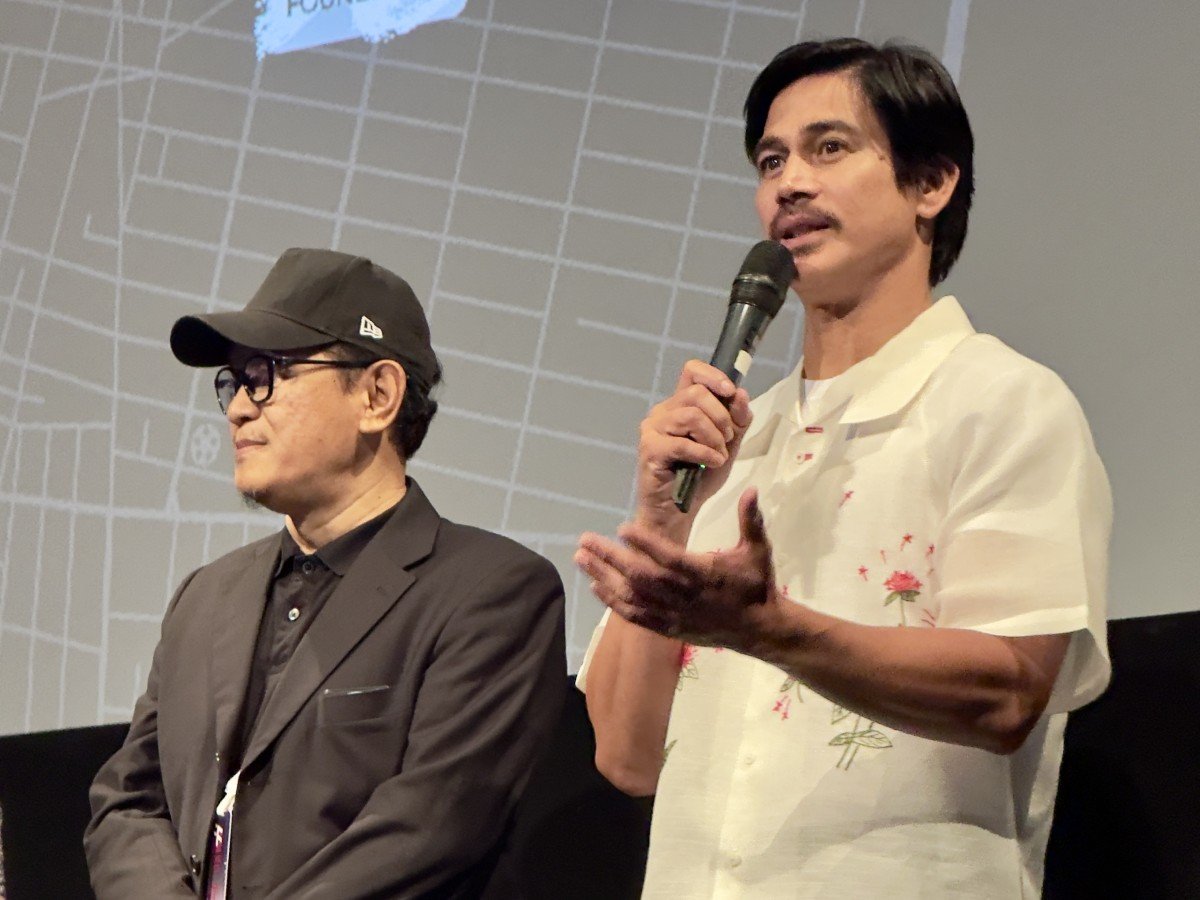
“I’m a very visual filmmaker,” he said, explaining that his work is often about “nostalgia, about the past, history.” He said the team drew on specific memories, including vintage cars and Metrocom police vehicles that he remembered from childhood.
Because modern Manila has changed so much, Red said some historic-looking areas were too difficult to use directly.
“There’s just too much to cover, erase, replace,” he said of old districts such as Binondo. So the production built sets in other parts of the city, including “that noodle shop all the way to the ending,” which he described as “a built set.”
The larger budget helped him realize those details.
“This is the first time I say it was like a playground,” Red said. “It’s the biggest budget movie I’ve ever done, and I had that space now to create those visuals.”
Pascual said the shoot itself was intense, especially the riot scenes, which were delayed by rain. Still, he described the experience as immersive rather than punishing. “It was an exciting experience to be in a set,” he said. “It’s like you’re transported to a different time.”
Both men connected the film’s setting to the present.
Pascual said he saw “a lot of parallelism as to what is happening in our country still,” adding that “corruption’s still prevalent up to now.” Red echoed that sense of urgency by framing the film as a look at the warning signs that existed before authoritarian rule fully took hold.
For Red, that is the film’s deeper value.
“I’m really into nostalgia and history,” he said, adding that he has long been interested in “digging for the roots of our problems today.”
In Manila’s Finest, those roots are rendered through firsthand testimony, careful reconstruction and a vivid attempt to recover the Manila vibe of a city standing just before the dark turn of Martial Law.
Editor’s note: Due to audience demand after the July 22 sold-out screening, an encore screening of Manila’s Finest was added for July 23 at 9:10 p.m. at IFC Center. Tickets are available at NYAFF.org. Piolo Pascual and Raymond Red are scheduled to appear at a Filipino community meet-and-greet from 7 to 9 p.m. July 23 at the Triad Theater in Manhattan. Pascual is a former TOFA awardee, honored in Honolulu, Hawaii, in 2024.