Philippine-based Filipino journalists who joined an Israel-funded media study visit are facing criticism from press freedom and solidarity groups, which say accepting travel sponsored by a government involved in the war in Gaza raises questions about editorial independence, access and media ethics.
The trip was presented as an opportunity for Filipino journalists to experience Israel “beyond the headlines.” Critics, however, argue that government-sponsored travel can influence coverage by shaping access, schedules, interview opportunities and the range of perspectives reporters encounter.
The National Union of Journalists of the Philippines (NUJP), urged media workers to reject Israel-sponsored trips. The group said accepting sponsored travel from a government accused of genocide is “downright unethical,” raising concerns about journalistic independence and public trust in coverage of the war.
Critics also questioned whether journalists on the trip would have sufficient access to Palestinian communities and independent sources affected by the conflict. The Filipino Freelance Journalists’ Guild said media workers should consider whether reporting can remain fully independent when access is provided by a government with a direct stake in the story.
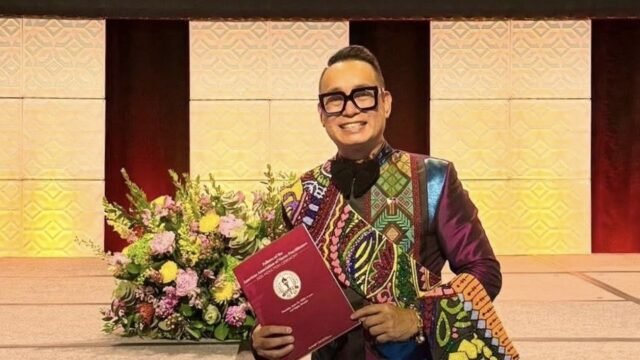
Among those defending participation is Monsi Serrano, publisher of The Philippine Business and News, or THEPHILBIZNEWS. In a public statement, Serrano rejected what he called an “irresponsible, reckless, and unfounded characterization” of journalists who accepted the invitation.
Serrano said critics should not make assumptions about the integrity, independence or professional judgment of participants without knowing what they experienced, the questions they asked or what they intended to report.
Responding to criticism from veteran journalist Inday Espina-Varona, Serrano said critics should not make assumptions about the integrity, independence or professional judgment of participants without knowing what they experienced, the questions they asked or what they intended to report.
He said THEPHILBIZNEWS has participated in media and study visits organized or facilitated by embassies, governments and private organizations in Switzerland, Taiwan, Japan, Thailand, Malaysia, Indonesia, Hong Kong, Singapore, the Czech Republic, Poland and Ukraine, in addition to Israel.
“In all these engagements, including this one, our participation does not mean surrendering our editorial independence,” Serrano said.
Serrano said hosts of the media visits had not instructed his publication on what to write, what not to write or what questions to ask. He said independent reporting requires journalists to observe events firsthand, conduct direct interviews, review documentation and verify information for themselves.
“Our duty is to find the truth, understand the facts, ask difficult questions, hear different perspectives, and report what we independently observe and verify,” Serrano said. “And sometimes, that requires being on the ground.”
The THEPHILBIZNEWS publisher said social media posts, videos, commentary and reports from afar can provide valuable information and perspectives, but should not automatically replace firsthand observation, direct interviews, documentation and independent verification.
He acknowledged that questions involving press freedom, civilian suffering, journalists killed in the conflict and access to different perspectives are legitimate. But Serrano said those concerns should not lead to sweeping judgments about journalists who chose to participate in the trip.
Serrano also cited the Philippines’ longstanding diplomatic relationship with Israel, while saying Filipino journalists should not be uncritical of the country.
“The Philippines and Israel have also been friends for decades, and our two countries have a long history of diplomatic relations and cooperation,” Serrano said. “That does not mean Filipino journalists should be uncritical of Israel. On the contrary, we should ask difficult questions and report what we find.”
He also questioned why the criticism was directed at Filipino journalists who joined the Israel study visit while the Philippines faces what he described as pressing domestic and foreign-policy concerns, including China’s actions in the West Philippine Sea.
“With so many pressing issues confronting our own country — including China’s continuing aggression and assertiveness in the West Philippine Sea — why are we training our guns on Filipino journalists who accepted an Israel study visit?” Serrano said.
Serrano said legitimate questions should be raised about any government-facilitated media visit, but argued that those questions should not become grounds for attacking or prejudging participating journalists.
“We are not adversaries. We are journalists,” Serrano said. “And whether we agree on every issue or not, we should recognize that we have a shared professional and moral responsibility: to seek the truth, know the truth, and report the truth.”
Critics maintain that sponsored visits involving governments directly connected to an armed conflict require exceptional caution and transparency. They argue that official access can provide useful information, but should not become the only framework through which reporters understand the war and its consequences.
Serrano appealed to fellow journalists and commentators not to “demonize or prejudge” colleagues simply because they accepted an invitation to report from a place they believed required closer scrutiny.
“Let us judge them by their reporting, not by the fact that they accepted an invitation to see and report from the ground,” he said.