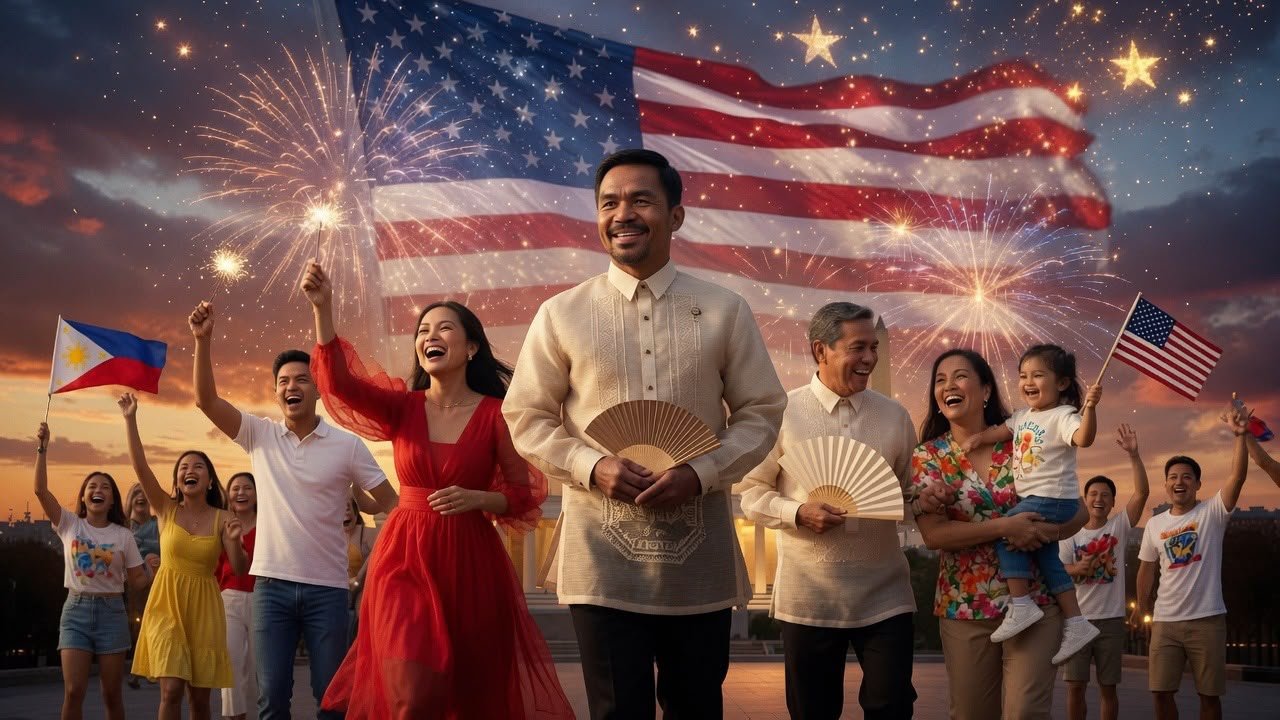
When the United States marks its 250th founding anniversary, the country will pause to consider two and a half centuries of promises – and the communities that have helped carry those ideals forward.
Filipino Americans are among them, building lives and institutions that speak to freedom, opportunity and belonging.
More than a decade ago, that visibility was far from guaranteed.
In New York City, where Filipino Americans were present but often overlooked, a small awards program was launched to honor community achievers in the tri-state area.
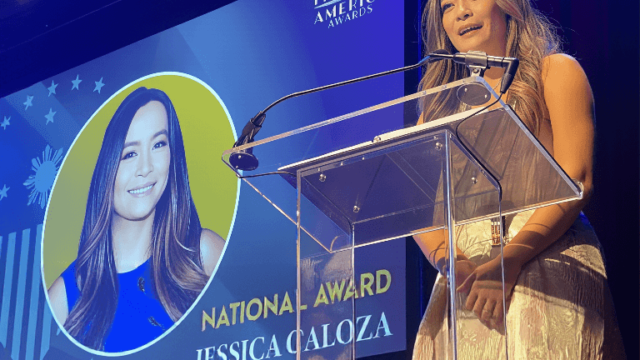
That program, The Outstanding Filipino Americans in New York (now known as the TOFA: The Outstanding Filipino Awards) began with a handful of honorees on a Manhattan stage and has since grown into a national and global platform recognizing Filipino excellence.
From those early nights at Carnegie Hall, TOFA has gone on to honor close to 500 Filipino Americans and global Filipinos whose work anchors local neighborhoods and reaches national institutions. As the awards expanded beyond New York to other states and, eventually, international communities, its honorees started to form a living archive of Filipino contributions to American life.
This feature looks at a select group of those honorees in the lead-up to America250 and considers how their achievements reflect the ideals the celebration is meant to honor – from democracy and rights to culture, care and innovation.
Public service and representation
Filipino Americans in public service have often carried the weight of being firsts – first Filipino in a state legislature, first Filipino American attorney general, first Fil-Am mayor in a town’s history. Their presence signals more than personal success; it widens who gets to be seen as part of “We the People.”
TOFA honorees include New York Assembly Member Steven Raga and California Attorney General Rob Bonta, the first Filipino American to hold that post and one of the most visible Asian American officials in the country.
Other honorees range from Ambassador Mario de Leon Jr. in New York and Ambassador Libran Cabactulan at the United Nations to local leaders such as Mayor Ron Falconi in Ohio and Mayor Arvin Amatorio in New Jersey.
In Hawaii, Gov. Ben Cayetano, Sen. Bennette Misalucha and Rep. Trish La Chica reflect the long-standing presence of Filipinos in island politics, alongside institutions such as the FilCom Center. Together, they trace a line from symbolic representation toward structural influence, showing how Filipino Americans have stepped into rooms where policy is written and communities are served.
Community advocacy and diaspora institutions
If elected officials are the visible face of change, community advocates and institutions are often its backbone.
Filipino American organizers, educators and volunteers have kept histories alive, defended rights and built spaces where people can gather and feel seen.
The Filipino American National Historical Society, honored by TOFA, has spent decades documenting Filipino American history and helping secure the observance of Filipino American History Month. The Filipino School of New York and New Jersey and the Association of Fil-Am Teachers of America have created learning environments where children and adults can study language, culture and civic engagement.
Legal and rights-based work appears in honorees such as the Filipino American Legal Defense Fund and migrant advocacy organizations like Tanggol Migrante. Figures including Jon Melegrito, Loida Nicolas Lewis, Rozita Lee and Gloria Caoile represent years of organizing around veterans’ recognition, voting rights, immigrant protections and broader Asian American and Pacific Islander concerns.
On the road to America250, their work underscores that the arc of American ideals only bends when communities organize, remember and insist that their stories matter.
Arts, culture and media
Culture has long been one of the most visible entry points for Filipinos into the American imagination. Artists, performers and storytellers transform personal histories into shared experiences, reshaping who appears on stage, on screen and in print.
Tony Award-winning actor and singer Lea Salonga, honored in TOFA’s early years, has become a global symbol of Asian representation on Broadway and in musical theater. Theater companies and productions such as Ma-Yi Theatre Company, “Here Lies Love” and “Larry the Musical” foreground Filipino and Filipino American narratives in spaces that once rarely featured them.
Fashion designers Monique Lhuillier and Josie Natori bring Filipino sensibilities into global luxury and design, while figures like Geena Rocero push boundaries in visibility and transgender rights.
In journalism and media, honorees include investigative reporter and educator Dr. Sheila Coronel, Makilala TV, and platforms such as Inquirer.net that have helped carry Filipino stories across generations and borders.
Pulitzer Prize-winning journalist Mariel Padilla, Nobel Peace Prize laureate Maria Ressa and Vivian Talambiras-Cruz, whose work is tied to global efforts for peace, extend that influence into international institutions.
Comedian Jo Koy, actor Darren Criss and drag artist Manila Luzon, along with singers Martin Nievera, Lani Misalucha, Ai Ai delas Alas, Jaya, Nonoy Zuniga and Pops Fernandez, connect audiences across the Pacific through performance.
Taken together, these honorees show how Filipinos have written themselves into America’s cultural story — not only through heritage celebrations, but through mainstream institutions that shape national memory.
Health, education and care
Filipino nurses, doctors and health workers have long been part of the backbone of American health care. TOFA’s recognitions reflect that reality and a broader commitment to care and education within the Filipino American community.
Organizations such as the Philippine Nurses Association and the Philippine Medical Association in America highlight professional leadership across hospitals and clinics. Individual honorees include May Parsons, the Filipina nurse who administered the world’s first approved COVID-19 vaccine in the United Kingdom, and Dr. Nancy Atmospera-Walch and Tess Mauricio, whose work spans clinical care, medical entrepreneurship and community health.
In education and scholarship, figures like psychologist Dr. Kevin Nadal have advanced understanding of microaggressions, identity and the experiences of Filipino Americans and other communities of color. Their stories remind readers that national progress is measured not only in laws and headlines, but in the everyday work of healing and teaching.
Business, innovation and global presence
Filipino American contributions to business and innovation appear both in neighborhood storefronts and global boardrooms. TOFA honorees represent that full range.
The Philippine American Chamber of Commerce and companies such as Jollibee have expanded Filipino food and business footprints across American cities. Restaurateur Nicole Ponseca helped redefine Filipino cuisine in New York and beyond, turning dishes once seen mainly as home cooking into widely sought-after dining experiences.
In technology, engineer and entrepreneur Dado Banatao symbolizes Filipino talent in Silicon Valley and innovation sectors.
Sports honorees include Jordan Clarkson, a high-profile player of Filipino descent, and Manny Pacquiao, whose boxing career made him one of the most recognizable Filipinos in the world, while rising champions such as Alex Eala and Lee Kiefer extend that presence into elite competition.
Public finance and governance appear again in figures such as Los Angeles City Controller Kenneth Mejia, showing how economic stewardship and representation intersect.
Together, these honorees suggest that Filipino Americans are part of the country’s economic engine and global image, not only in traditional migrant labor roles but across modern industries.
On the road to America250
As America approaches its 250th year, the official commemoration invites residents to look back and look ahead – to examine founding ideals of democracy and equality and to ask how well those ideals have been extended to all who call the United States home.
The nearly 500 individuals and organizations recognized by TOFA since 2011 do not represent the entirety of Filipino American experience. They do, however, offer a cross-section of those who have tried to make their communities fairer, more vibrant and more inclusive, whether through public service, organizing, storytelling, caregiving or entrepreneurship.
What began as a New York-centered celebration of Filipino achievers has become a national and global spotlight. Today’s TOFA roster includes honorees from across the United States and from diaspora hubs abroad, reflecting how Filipino Americans and global Filipinos move through city halls and barrios, stages and clinics, classrooms and business districts.
Seen together, this select group of honorees suggests a simple truth: the American story has always been written by more than those whose names appear in founding documents. Filipino Americans, like many other communities, have been writing their part of that story all along, in quiet service and on public stages.
To honor their work on the road to America250 is to recognize both the progress that has been made and the unfinished work that still lies ahead. It also affirms TOFA’s role as one of the few platforms that consistently documents these journeys, ensuring that Filipino Americans and global Filipinos are visible in the narrative of a nation turning 250.