Appearing recently on “The Spokes” on the Bilyonaryo News Channel, the New York-based lawyer laid out a series of practical, sometimes sobering reminders for Filipino immigrants, green card holders and even naturalized U.S. citizens.
His central message: don’t assume you’re safe just because you’ve lived in America for years.
Nick Caraquel strongly advises Filipinos to carry proof of their legal status at all times, whether that’s a U.S. passport, green card, work permit or other valid immigration document.
He stressed that authorities cannot determine anyone’s status from appearance, accent or surname alone, and that having papers on hand can help prevent wrongful detention in an era of more aggressive checks and enforcement sweeps.
He also flagged the vulnerability of the undocumented.
Out of an estimated 4.1 million Filipinos living in the U.S., he notes that hundreds of thousands are believed to be out of status and therefore face heightened risk of arrest or removal when policies shift or enforcement priorities change.
For those pursuing permanent residency, Caraquel pointed to recent policy changes that have complicated the path to a green card.
A U.S. Citizenship and Immigration Services memorandum initially pushed many applicants (including those married to U.S. citizens) to leave the country and process their cases through consulates abroad rather than adjusting status inside the United States. After strong backlash from advocates, officials allowed some flexibility for people who can show clear economic or national benefit, but the episode underscored how quickly rules can change.
He also warned green card holders with pending criminal cases to think twice before traveling.
Citing a recent Supreme Court decision, Caraquel said some returning permanent residents are now being treated as “seeking admission” at the border, and can be stopped, questioned or even deemed inadmissible based solely on unresolved, and sometimes minor, charges on their record.
Naturalized citizens are not entirely in the clear either, he cautioned.
Caraquel has seen a sharp uptick in denaturalization investigations targeting people accused of misrepresentation or undisclosed criminal history on their original citizenship applications.
On the lighter end of the spectrum, he noted that immigration officers are also reviewing social media accounts when evaluating some applications, including tourist visa extension requests – a reminder that public posts and online behavior can carry real-world consequences.
Caraquel speaks from a place of lived experience as well as legal expertise.
A dual-licensed attorney and founder of iDreamAmerica Law Offices in Elmhurst, New York, he built his career after a childhood in Davao that included working as a street vendor to help his family.
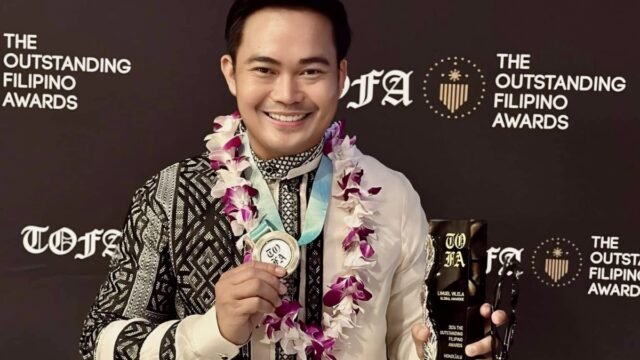
His rise from those beginnings to passing the New York bar has been held up as a modern immigrant success story, earning him the 2018 Pamana ng Pilipino Presidential Award and recognition from The Outstanding Filipinos in America (TOFA), which later included him among its “100 Most Influential Filipino Americans” honorees.
Despite the accolades, Caraquel’s focus remains on keeping families informed and prepared. His advice, he says, is not meant to scare Filipinos, but to arm them with knowledge so they can protect the lives and dreams they’ve built in the United States.