“The Road to Sydney” is an independent documentary that feels less like a neatly packaged narrative and more like a lived diary of what it means to fight for visibility, love, and stability when the world keeps trying to push you to the margins.
At its center is Filipina transgender dancer and choreographer Sydney Loyola, whose on-screen presence carries the weight of institutional and intimate rejection – and the quiet, stubborn hope that comes from building a chosen family when traditional support systems fall away.
Directed by award-winning filmmaker, Benito Bautista, the film follows Sydney from her roots in the Philippines to her life in the United States, mapping the physical and emotional miles between home, exile, and a new self.
Her transition comes at a steep cost: job loss, housing instability, and the kind of social exclusion that sits between policy and prejudice, the line where institutional rules and interpersonal bias reinforce each other.
Bautista’s camera does not sensationalize these moments; instead, it lingers, letting viewers feel the weight of forms not signed, doors not opened, and invitations that never arrive.
But “The Road to Sydney” is not only about what Sydney loses – it is about what she creates. When family ties strain under the pressure of tradition and expectation, the film shows her building another network: fellow artists, friends, allies who become her chosen family.
In late-night rehearsals, informal gatherings, and quiet conversations, these relationships become the engine of acceptance the world has refused to provide, affirming her identity, artistry, and humanity long before institutions catch up.
For many in the Filipino and Filipino-American community, that tension between cultural norms and personal truth is painfully familiar. Diaspora audiences will recognize the push and pull of belonging – how one can be celebrated for talent yet questioned for identity, embraced abroad yet scrutinized at home.
“The Road to Sydney” doesn’t resolve this contradiction with easy triumph; instead, it suggests that survival and joy are often found in the small, everyday acts of solidarity, the people who choose you even when the systems around you do not.
Behind the film is a team whose own journey mirrors the story on screen. Bautista, and producer, Emma Bautista, are known for their commitment to independent Filipino and Fil-Am cinema, spent years tracing Sydney’s path, shaping a documentary that feels both intimate and expansive.
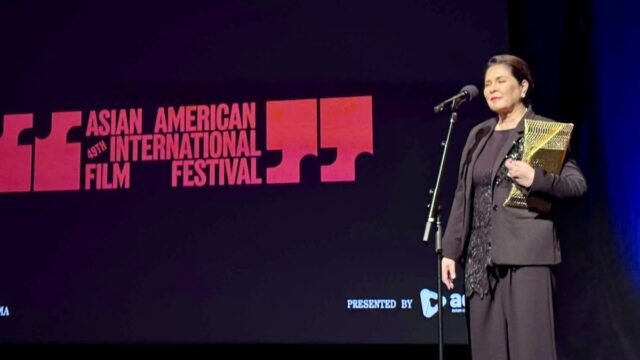
Executive producer Sonia T. Delen brings to the project a long record of advocacy and leadership in the Filipino and global community, bridging finance, nonprofit work, and cultural initiatives. Her role in helping shepherd “The Road to Sydney” through development and onto screens reflects the same ethic of care and commitment that the film celebrates.
The documentary has quietly built momentum on the festival circuit and in community venues, with screenings in North America and international showcases that highlight its tender, unvarnished look at a trans woman’s search for identity and home. Coverage from Cannes’ Marché du Film to LGBTQ+ and documentary festivals has positioned “The Road to Sydney” as a standout work in contemporary Filipino and Fil-Am storytelling, amplifying voices too often sidelined even within progressive spaces.
Delen herself has continued to receive honors from institutions in the Philippines and the U.S. recognizing her broader advocacy and leadership as much as her work in film. In public remarks around these recognitions, she has often framed “The Road to Sydney” not as her achievement alone but as a collective effort – a testament to Sydney’s courage, alongside co-executive producers Wendy Pascual and Radi Calalang, producer Emma Francisco Bautista, director Bautista’s vision, and the communities that rallied around the project.
She has thanked audiences for embracing a story that asks hard questions about who is allowed to belong, and she has pointed back, again and again, to the importance of telling trans narratives with respect, nuance, and care.
That framing gives the film an evergreen resonance.
“The Road to Sydney” is not locked to a single awards season or news cycle; it speaks to ongoing debates about trans rights, migration, and how Filipino and Filipino-American communities redefine family across borders.
By centering chosen families as both refuge and resistance, the documentary offers a powerful reminder: when institutions fail, it is often ordinary people (friends, peers, co-workers, co-creatives) who step in to say, “You belong with us.”
Delen’s role on “The Road to Sydney” aligns with a broader record of service recognized by TOFA and beyond.
A former TOFA honoree and President Biden Lifetime Achievement Awardee through TOFA’s one-time Presidential Volunteer Service Award–certified program, she has been cited for sustained community service, volunteer leadership and advocacy for Filipino culture and LGBTQ+ equality in the United States.
That combination of artistic support and grassroots work has made her a touchstone for many in the Fil-Am diaspora, and a model for how recognition can be tied to long-term, lived commitment rather than a single night onstage.