Philippine cinema takes another confident step onto the international stage this month as Piolo Pascual’s crime drama “Manila’s Finest” screens at IFC Center during the New York Asian Film Festival (NYAFF).
The film, directed by Raymond Red, places Pascual at the center of a tense period piece about law enforcement, corruption and the looming shadow of martial law – themes that resonate strongly with global audiences increasingly attuned to questions of power and accountability.
Pascual, an award-winning Filipino actor, singer, model and producer, has long been regarded as one of the most bankable and respected figures in Philippine entertainment.
In “Manila’s Finest,” he plays Capt. Homer Magtibay, a Manila police officer navigating rising social unrest and a string of brutal crimes in the late 1960s, just before the declaration of martial law. Critics in Manila have described the film as a tense, layered crime thriller that uses Magtibay’s perspective to examine how corruption becomes embedded in institutions rather than presenting easy tales of heroism.
What makes Pascual’s performance compelling is his refusal to play Magtibay as a simple “good cop.” He carries himself with authority and paternal warmth (a seasoned officer who believes in order and civic duty) yet the camera frequently lingers on his small hesitations: a clenched jaw before making a deal, a long drag of a cigarette when conscience collides with survival, a forced calm when he realizes the system may be beyond saving.
Reviewers have praised how he balances steady screen presence with anxious energy, turning Magtibay into a man whose integrity is constantly tested by pressure from superiors, the militarized Philippine Constabulary and the realities of life in Manila’s slums.
Set against pre–martial law Manila, the film situates Magtibay between competing forces: his local police unit, nicknamed “Manila’s Finest,” and national security apparatuses that push the country toward repression. As he investigates killings tied to youth unrest and poverty, the narrative shows him bargaining with gang leaders, negotiating messy compromises and confronting the limits of individual goodwill in a broken system.
Pascual’s work makes those compromises feel lived-in rather than abstract; his Magtibay understands the cost of resistance but also knows complicity carries its own moral weight.
Bringing this story to NYAFF at Film at Lincoln Center and IFC Center underscores how Philippine cinema is increasingly recognized as a vital voice in global conversations about history and justice.
In recent editions, the festival has highlighted Filipino films for their “cinematic brilliance,” emphasizing their ability to tackle political trauma, social inequality and personal resilience with stylistic ambition and emotional depth. “Manila’s Finest,” with its period detail and unflinching look at corruption, fits neatly into that trajectory, offering New York audiences a crime thriller that doubles as a critique of authoritarian drift and systemic rot.
For Pascual, the film reinforces his status not just as a star but as an actor willing to inhabit morally conflicted characters and confront uncomfortable chapters in Philippine history. His participation in NYAFF’s international premiere (including a scheduled Q&A with Red) also reflects how Filipino artists are now front and center in major festival conversations about Asian cinema’s future.
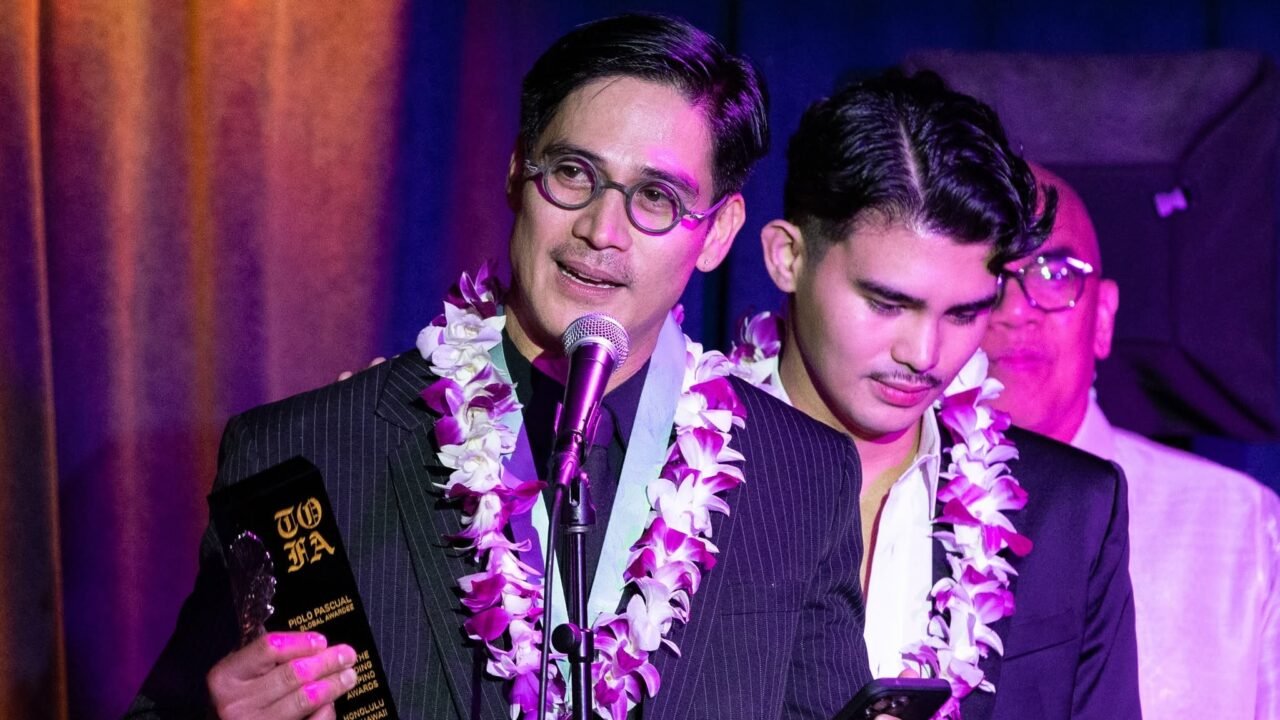
It is the kind of global visibility recognized by The Outstanding Filipino Awards (TOFA), which honored Pascual in Honolulu in 2024 for elevating Filipino storytelling and representation on the world stage.
The 25th New York Asian Film Festival runs July 10–26, across five Manhattan venues—Film at Lincoln Center, SVA Theatre, IFC Center, Anthology Film Archives, and the Korean Cultural Center New York. Pascual is scheduled to attend on July 22 at IFC Center for the international premiere of Manila’s Finest, followed by a talkback. For more information, visit https://www.nyaff.org.