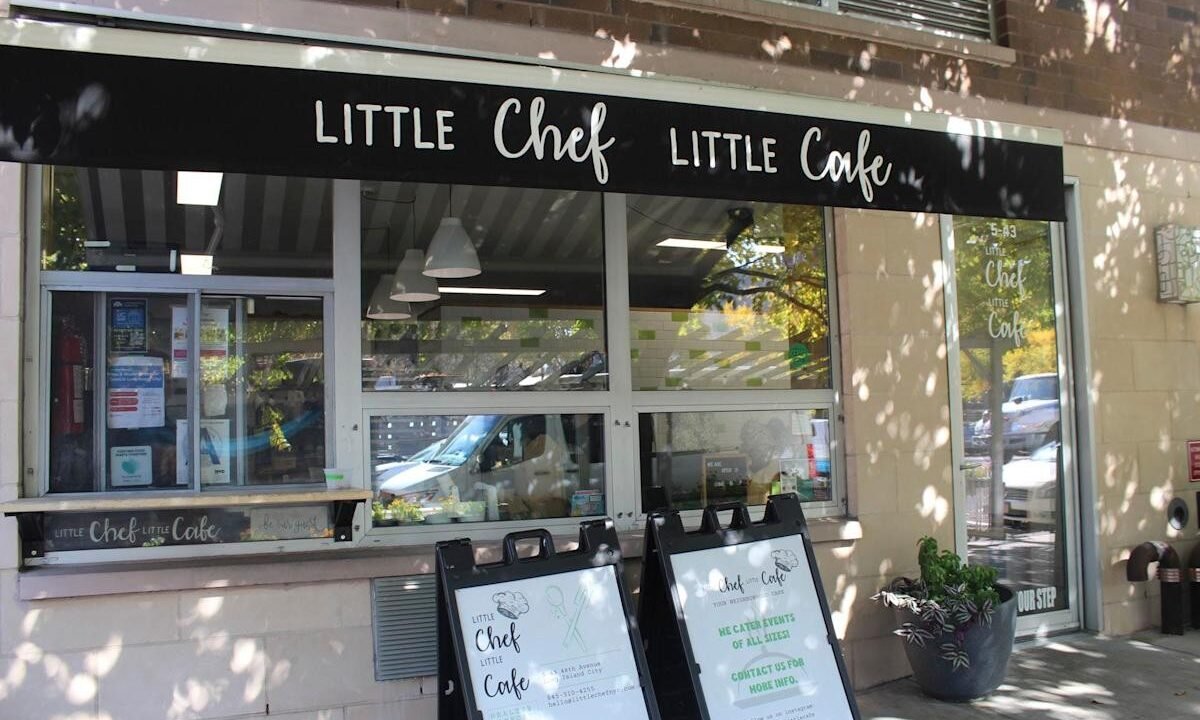
When diners scroll through the hundreds of restaurants listed for NYC Restaurant Week this season, they’ll find steakhouses, trattorias, sushi counters and bistros, but only one Filipino restaurant: Little Chef Little Cafe in Long Island City.
Little Chef Little Cafe, a cozy spot on 48th Avenue near the Queens waterfront, brings a health‑conscious, Filipino American menu to a neighborhood better known for coffee shops and contemporary American cafes. For this season’s Restaurant Week, the cafe is offering prix‑fixe lunch and brunch daily and a set dinner menu on select evenings, in line with the citywide price tiers of 30, 45 and 60 dollars.
At Little Chef Little Cafe, chef‑owner Diana Manalang builds a Filipino American menu that moves from breakfast sandwiches and toasts to salads, soups, rice bowls and scratch‑made baked goods, with many vegetarian and vegan options. During Restaurant Week, she leans into that hybrid identity with multi‑course dinners that might include dishes such as tuna kinilaw, brisket kare‑kare, lechon kawali and Filipino‑inspired desserts like ube crème brûlée, pandan coconut panna cotta and ginataang bilo‑bilo, served family‑style at a communal table.
For Filipino New Yorkers scanning the official listings in hopes of planning a Restaurant Week “food crawl” through their heritage, the search ends quickly.
“It’s a surprise,” said Miles dela Cruz, a regular diner at Filipino American restaurants in Woodside, Queens, noting the growing number of Filipino eateries across the city (from Queens’ Little Manila to Brooklyn food halls) that remain absent from the promotion.
The disconnect is striking because Filipino food has been gaining ground in New York, with guides now listing more than a dozen notable Filipino restaurants spanning comfort‑food canteens, bakeries and contemporary dining rooms. Yet participation in Restaurant Week remains voluntary, and most owners don’t sign up.
Citywide, fewer than 3% of New York’s roughly 24,000 restaurants take part in Restaurant Week in any given season, according to recent coverage of the program’s economics. That means even popular cuisines can end up represented by only a handful of venues (or just one) once the field is narrowed by borough, price point and capacity. For a community whose restaurants are often independent, family‑run and clustered in working‑class neighborhoods, the calculus can be even more complicated.
Restaurateurs interviewed in recent coverage of Filipino dining in New York describe a balancing act between visibility and survival. Restaurant Week’s appeal is obvious: a flood of new diners and the legitimacy of being listed alongside marquee Manhattan names. But the realities behind the prix‑fixe menus (set at 30, 45 or 60 dollars) can make it a tough sell for small, immigrant‑owned places.
Discounted multi‑course meals are meant to feel like a bargain to diners, yet ingredients, rent and labor costs have climbed steadily, squeezing margins citywide.
Some owners told TOFA NEWS that they end up working harder for less profit during Restaurant Week, especially if they cannot raise drink prices or trim portions without alienating their regulars. For a modest Filipino canteen already operating on thin margins, committing to those price points for several weeks can feel risky rather than promotional.
There is also the question of bandwidth.
Many Filipino restaurants run with small crews; adding the strain of higher volume, new set menus and stricter reservation schedules can disrupt the steady business they rely on. Others prefer to pour their limited marketing energy into events designed specifically around Filipino cuisine, such as Filipino Restaurant Week, consulate‑supported campaigns and community festivals where the cultural context is clearer and the audience more targeted.
Cultural advocates say the story is not that Filipino food is unwelcome in Restaurant Week, but that the program’s one‑size‑fits‑all structure doesn’t always fit communities whose restaurants evolved with different expectations around price, hospitality and pace.
“We are still considered something exotic,” said chef John Fuentes, owner of the Swabe food truck based in Queens, describing the extra work involved in educating new diners while keeping regulars happy.
For now, Little Chef Little Cafe is the outlier: a Filipino American cafe with a tiny kitchen and a community‑focused ethos stepping onto the city’s biggest promotional stage. Its lone listing on the Restaurant Week roster is a reminder that while Filipino food has carved out a place in New York, many of the kitchens behind it are still doing that work far from the city’s splashiest promotions.